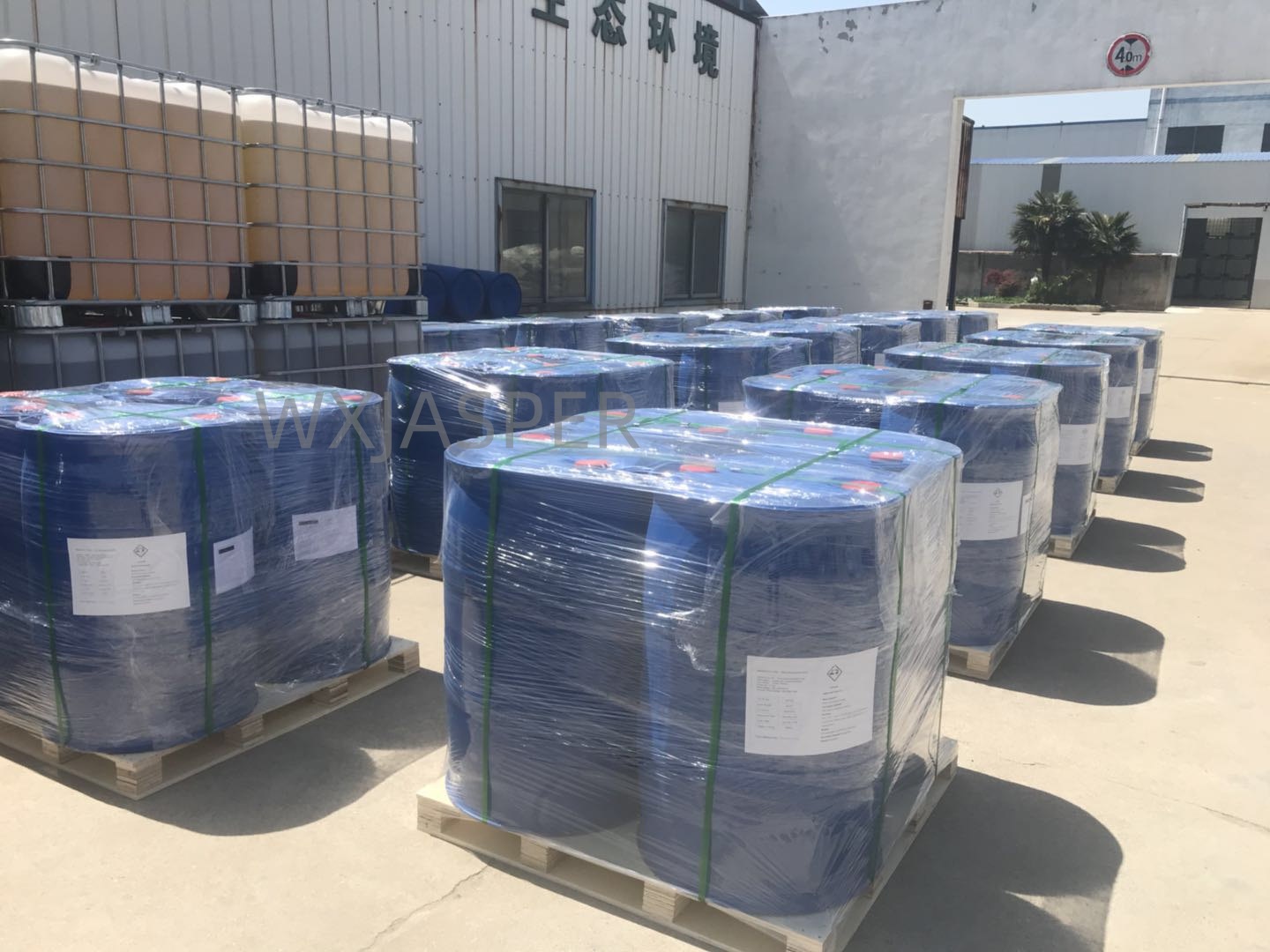
CasNo: 134180-76-0
MF: C15H38O5Si3
Appearance: liquid
Delivery Time: 15 days
Packing: 200kg/drum
Purity: 99%
The product parameters are precisely calibrated to meet the complex working conditions of agricultural spraying, with excellent batch-to-batch stability. The specific indicators are as follows:
| Parameter Item | Specific Indicator | Significance of Indicator |
|---|---|---|
| Viscosity (25℃) | 80-100 cps (mPa.s) | Ensures good stability and adhesion after mixing with various pesticide solutions, suitable for mixing with high-viscosity formulations (such as concentrated emulsions), and enhances the retention effect of the pesticide solution on crop surfaces. |
| Surface Tension (0.1% Concentration) | < 21 mN/m | Far below the critical wetting value of plant leaves, rapidly reduces the contact angle between the pesticide solution and the leaf surface, achieving efficient spreading, wetting and penetration, and increasing the target coverage area and absorption efficiency. |
| Cloud Point | < 10℃ (aqueous solution environment) | Suitable for low-temperature to normal-temperature operation scenarios, maintaining stable performance within the normal agricultural production temperature range and not affected by temperature fluctuations. |
| pH Applicable Range | 6-8 | Matches the pH range of most pesticides and foliar fertilizers, avoiding performance degradation caused by acidic or alkaline environments and ensuring the stability of the efficacy after mixing. |
| Core Performance Rating | Wetting ★★★★, Spreading ★★★★, Penetrating ★★★★, Retention ★★★★ | Excellent balanced performance in four dimensions, and the strong retention feature extends the persistence of the pesticide solution, reduces the frequency of repeated application, and improves the efficiency of application operations. |
As a super spreading-penetrating and retention-type additive, at a concentration of 0.1%, it can reduce the surface tension of the pesticide solution to below 21 mN/m, quickly wetting the leaf surfaces of crops with thick waxy layers (such as citrus and grapes), rough branches and the bodies of pests. Its spreading area is several times that of ordinary additives. At the same time, it promotes the rapid absorption of the pesticide solution through leaf stomata, with the pesticide absorption rate reaching more than 85% within 10 minutes, significantly improving the efficacy by 30-60%; the strong retention feature extends the persistence of the pesticide solution by 20-30%, and enhances rainfastness to avoid efficacy loss caused by rainfall. It is especially suitable for rainy areas and scenarios with long-term control requirements.
It is compatible with various agricultural chemicals such as insecticides, fungicides, herbicides, foliar fertilizers, plant growth regulators, and biological pesticides, with no risk of mixing conflicts. It is suitable for multiple application equipment such as high-pressure sprayers, UAV spraying, and electrostatic spraying, and performs well in various planting scenarios such as fruit trees, field crops, and cash crops. It can especially effectively solve the control problems of hidden pests (such as scale insects and longhorn beetles) and branch diseases (such as canker), reducing spraying blind spots and repeated application costs.
The product has low toxicity, high safety for higher animals, and is easily degradable in the natural environment without residual pollution risks, meeting international agricultural environmental protection and safety standards. Through synergistic and persistence-extending effects, it can reduce pesticide usage and application frequency by 30-60%, which not only reduces agricultural production costs but also reduces the impact of pesticides on the ecological environment, helping to achieve green and sustainable agricultural development.
When used as one of the components of pesticide formulations, the recommended addition amount is 0.1%-5%, specifically adjusted according to the formulation type (such as concentrated emulsion, suspension concentrate) and persistence requirements. During production, the system pH needs to be stabilized at 6.5-7.5 through a retarder to ensure that the product continues to exert stable performance and retention effect within the shelf life of the formulation.
Address: Chalin Village, Dingshu Town, Yixing City, Jiangsu Province, China, 214200Email:sales@wxjasper.com
Tel:+86-15906152668Phone:+86-15906152668