Your Location:Home > Products > Solvents > Cocoamine ethoxylate 5 EO
CasNo: 61791-22-8
Appearance: liquid
Delivery Time: 15 days
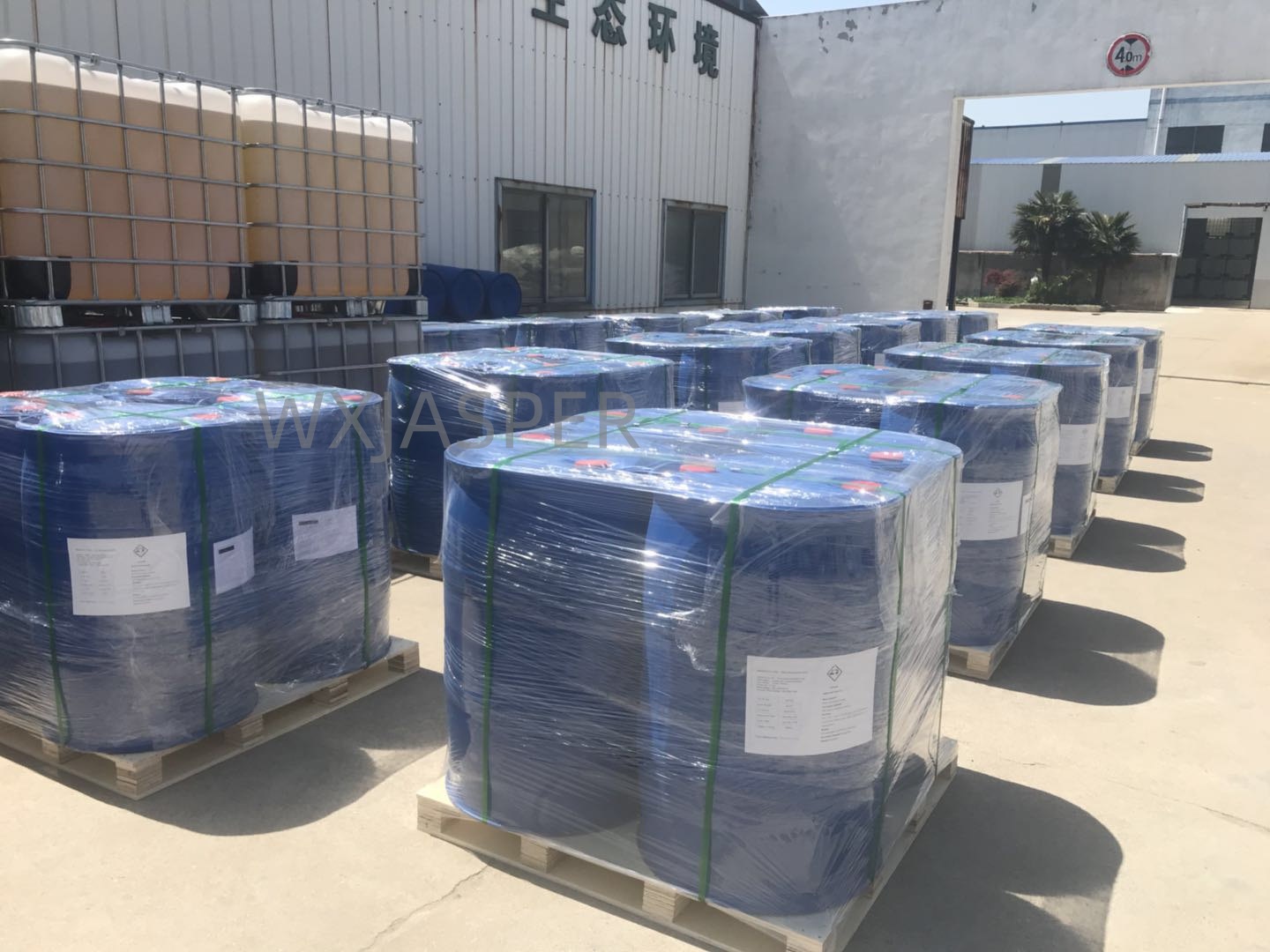
Packing: 200kg/drum
Purity: 98%
Product Category: Non-ionic surfactant (cocoamine ethoxylate type)
Chemical Structure: Formed by the addition reaction of cocoamine with 5 moles of ethylene oxide (EO). Its molecular structure consists of oil-loving cocoamine alkyl chains and water-loving polyoxyethylene ether chains, with the proportion of oil-loving groups falling between the "2 EO" grade and higher EO polymerization grade products.
Core Functions: Integrates emulsifying, dispersing, and wetting properties. It can stably exert surface activity in moderate electrolyte environments (e.g., pesticide emulsifiable concentrates and industrial cleaning fluids containing a certain concentration of salts), with higher hydrophilicity compared to the "2 EO" grade.
|
Parameter Item |
Typical Value |
|---|---|
|
Appearance |
Light yellow to amber viscous liquid |
|
Active Matter Content |
≥98% |
|
pH Value (1% aqueous solution) |
7.0 - 9.0 |
|
Solubility |
Easily soluble in organic solvents such as ethanol and toluene; soluble in water with stirring |
|
Cloud Point (1% aqueous solution) |
45 - 55℃ |
Moderate Electrolyte Stability: Maintains stable emulsifying and dispersing effects in systems containing moderate concentrations of salts and pesticide active ingredients (e.g., emulsifiable concentrates with 15% active ingredients), suitable for formulations with moderate hydrophilicity requirements.
Efficient Wetting and Penetration: Can significantly reduce liquid surface tension (to 30-35 mN/m), enhancing the adhesion and penetration of pesticide solutions on crop leaf surfaces. In industrial cleaning, it can quickly strip stubborn oil stains.
Strong Formulation Compatibility: Can be compounded with anionic and cationic surfactants, and is compatible with most functional additives (e.g., preservatives, thickeners), suitable for complex formulation systems.
Good Environmental Adaptability: Resistant to acids and alkalis (stable performance in the pH range of 5-10) and hard water, maintaining consistent performance under different water quality and process conditions.
Used as an emulsifier and wetting agent in dosage forms such as emulsifiable concentrates (EC) and microemulsions (ME). It is compatible with various pesticide active ingredients including organophosphates, pyrethroids, and triazoles, with a typical addition amount of 5-15%.
Can improve the dispersion stability of poorly soluble pesticides (e.g., trifluralin, acetochlor), extend the storage life of formulations, and is particularly suitable for pesticide formulations containing a certain concentration of electrolytes.
Applied in metalworking fluids (semi-synthetic cutting fluids) as an emulsifier and wetting agent. It efficiently removes metal chips and heavy oil stains while providing lubrication.
Suitable for oilfield chemicals (e.g., drilling fluid emulsifiers) to help stabilize oil-water systems and improve drilling efficiency.
Used in textile pre-treatment (desizing, scouring) to assist in removing oil and wax from fiber surfaces with minimal fiber damage.
Can act as a leveling agent in dye formulations to improve dyeing uniformity and reduce the risk of color spots.
Asphalt Emulsification: Used as an emulsifier in modified asphalt production to help form a stable oil-in-water emulsion system.
Ore Flotation: Applied in the flotation of non-ferrous metal ores (e.g., copper, zinc ores) to enhance the separation efficiency of minerals and gangue.
Storage: Store in a sealed container in a cool and dry place, avoiding high temperatures (>80℃) and direct sunlight. The typical shelf life is 12 months.
Operation: Avoid direct contact with skin or eyes. In case of accidental contact, rinse immediately with plenty of clean water; stir during dissolution to ensure uniform dispersion.
Compounding: A small-scale test is recommended to determine the compounding ratio with other surfactants or additives, to avoid system instability caused by compatibility issues.
Concentration Control: The addition amount is 5-15% in the pesticide field, and can be adjusted to 10-30% in the industrial cleaning field based on cleaning requirements.
Address: Chalin Village, Dingshu Town, Yixing City, Jiangsu Province, China, 214200Email:sales@wxjasper.com
Tel:+86-15906152668Phone:+86-15906152668