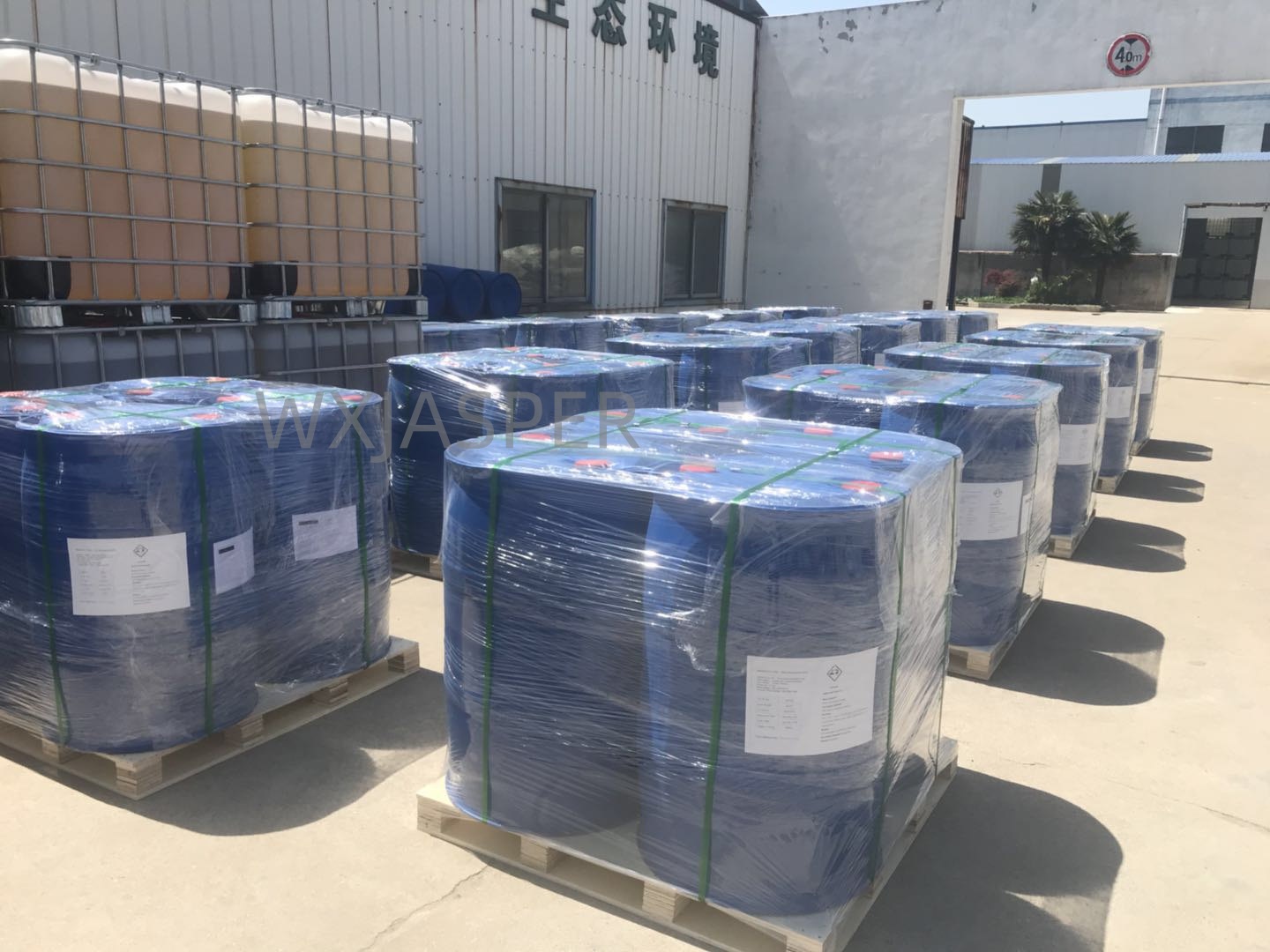
Ethylan NS-500 LQ

Basic information

  • Product Name:Ethylan NS-500 LQ
  • CasNo.:14409-72-4
  • MF:C33H60O10
  • MW:

Physical and Chemical Properties

  • Purity:99%
  • Boiling Point:
  • Packing:liquid
  • Throughput:
Inquiry

Product Details

CasNo: 14409-72-4

MF: C33H60O10

Appearance: liquid

Delivery Time: 15 days

Packing: 200kg/drum

Purity: 99%

Product Details of Ethylan NS-500 LQ

1. Basic Product Information

  • Product Category: Non-ionic surfactant (presumed to be a nonylphenol ethoxylate derivative, as the "NS" series is Nouryon’s classic non-ionic surfactant product line).
  • Supplier: Nouryon, a global leader in specialty chemicals. Formerly the chemical business of AkzoNobel, it holds leading technology in fields such as surfactants and catalysts.
  • Core Functions: Combines emulsifying, dispersing, and wetting properties. Suitable for pesticide formulations, industrial cleaning, textile auxiliaries, and other scenarios. It can efficiently reduce oil-water interfacial tension and improve formulation stability.

2. Key Properties and Characteristics

2.1 Chemical Composition and Structure

  • Its main component is nonylphenol ethoxylate (or its environmentally friendly alternative structure, such as branched fatty alcohol ethoxylate). Its molecular structure contains oil-loving alkyl chains and water-loving polyoxyethylene ether chains, classifying it as a typical non-ionic surfactant. Its HLB value meets broad-spectrum emulsification needs.

2.2 Key Physicochemical Parameters

Parameter Item Typical Value
Appearance Pale yellow transparent liquid
Active Matter Content ≥99%
pH Value (1% aqueous solution) 5.0 - 7.0
Solubility Easily soluble in water, ethanol, and most organic solvents
Stability Resistant to hard water, acids, and alkalis (stable in pH 4-10 range); no decomposition risk at high temperatures

2.3 Core Functional Advantages

  • Efficient Emulsification and Dispersion: It can stably emulsify oil-phase components such as mineral oil and aromatic solvents. In pesticide emulsifiable concentrates (EC), it enables uniform dispersion of high-concentration active ingredients; in industrial cleaning, it can efficiently strip oil stains and solid particles.
  • Strong Formulation Compatibility: It can be compounded with anionic and cationic surfactants, and is compatible with most functional additives (e.g., preservatives, solubilizers), making it suitable for complex formulation systems.
  • Outstanding Wetting Performance: It can significantly reduce liquid surface tension and improve the spreadability of formulations on solid surfaces (e.g., enhancing the adhesion of pesticide solutions to crop leaf surfaces in pesticide formulations).
  • Good Process Adaptability: Its low-foam characteristic is suitable for spray and immersion processes in industrial cleaning, and can also be used in low-foam degreasing processes for textile pre-treatment.

3. Main Application Fields

3.1 Pesticide Formulations

  • Used as an emulsifier in dosage forms such as emulsifiable concentrates (EC) and microemulsions (ME). It is compatible with various pesticide active ingredients such as organophosphates and pyrethroids, with a typical addition amount of 5-15%.
  • It can improve the dispersion stability of poorly soluble pesticides, extend the storage life of formulations, and enhance field efficacy.

3.2 Industrial Cleaning

  • Applied in metalworking fluids (semi-synthetic cutting fluids) as an emulsifier and wetting agent. It removes metal chips and oil stains efficiently while providing lubrication.
  • Suitable for eco-friendly industrial cleaners, replacing solvent-based cleaners and combining cleaning power with low toxicity.

3.3 Textile Auxiliaries

  • Used in textile pre-treatment (desizing, scouring) to assist in removing oil and wax from fiber surfaces with minimal fiber damage.
  • Can act as a dispersant in dye formulations to improve dyeing uniformity.

3.4 Other Fields

  • Water Treatment: Used as a dispersant in water treatment chemicals to facilitate the dispersion and removal of suspended impurities.
  • Coatings and Inks: Applied in the emulsification and dispersion of water-based coatings to improve pigment stability.

4. Usage Precautions

  • Storage: Store in a sealed container in a cool and dry place, away from high temperatures and direct sunlight. The typical shelf life is 12 months.
  • Operation: Avoid direct contact with skin or eyes. In case of accidental contact, rinse immediately with plenty of clean water.
  • Compounding: A small-scale test is recommended to determine the compounding ratio, as compatibility varies across different systems.
  • Concentration Control: The addition amount is 5-15% in the pesticide field, and can be adjusted to 10-30% in the industrial cleaning field based on cleaning requirements.