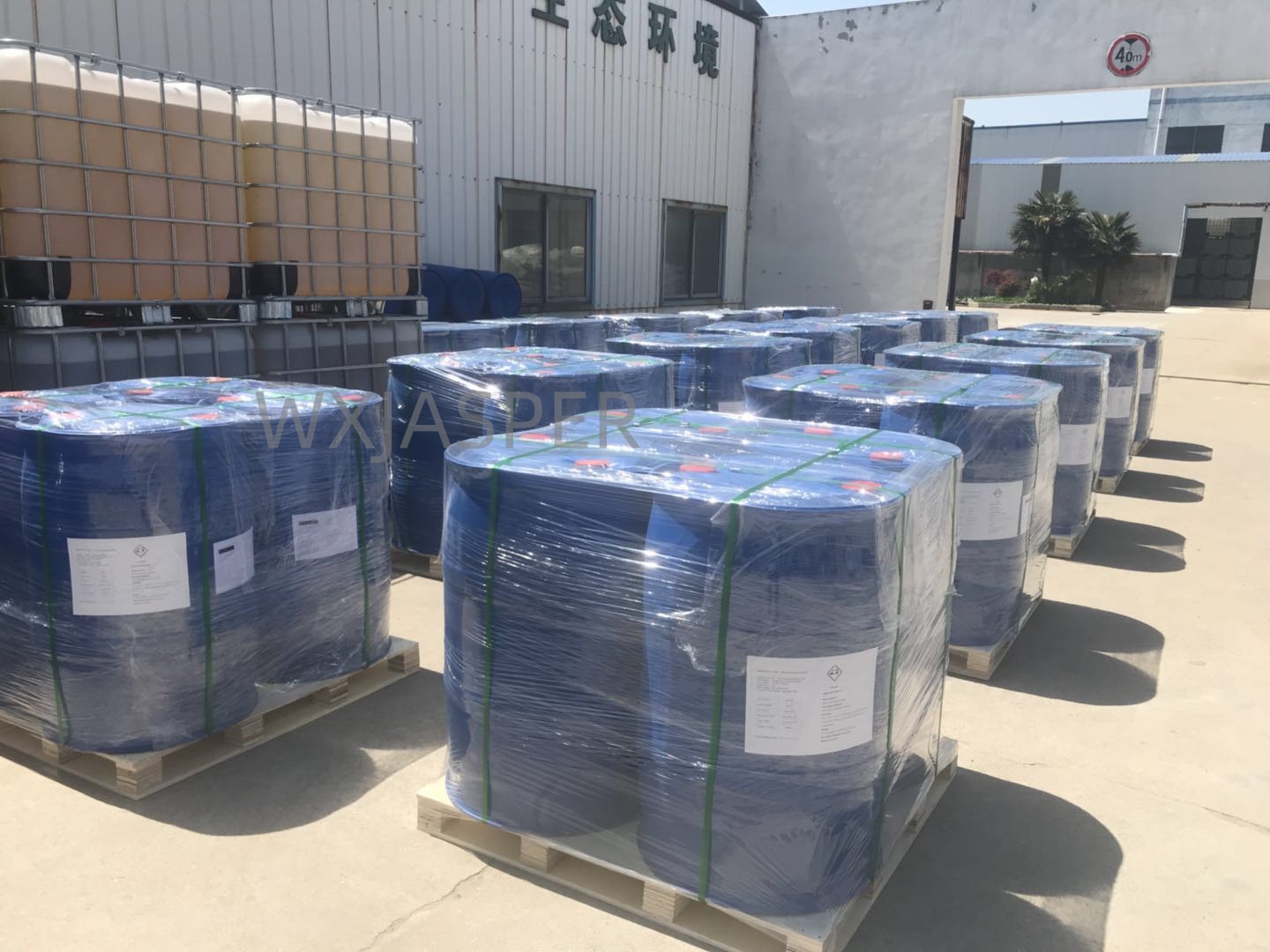
Agrilan AEC 145

Basic information

  • Product Name:Agrilan AEC 145
  • CasNo.:27306-90-7
  • MF:(C2H4O)nC14H28O3
  • MW:

Physical and Chemical Properties

  • Purity:99%
  • Boiling Point:
  • Packing:liquid
  • Throughput:
Inquiry

Product Details

CasNo: 27306-90-7

MF: (C2H4O)nC14H28O3

Appearance: liquid

Delivery Time: 15 days

Packing: 200kg/drum

Purity: 99%

1. Basic Product Information

  • Product Category: Anionic surfactant (alkyl ether carboxylate, AEC type)
  • Supplier: Nouryon, a global leader in specialty chemicals. Formerly the chemical business of AkzoNobel, it covers fields such as industrial chemicals and consumer chemicals, and holds technical advantages in segments like surfactants and catalysts.
  • Core Functions: Combines emulsifying, dispersing, and wetting properties. Benefiting from the synergistic effect of ether bonds and carboxyl groups in its chemical structure, it exhibits excellent mildness and stability, making it suitable for scenarios requiring high formula compatibility and skin-friendliness.

2. Key Properties and Characteristics

2.1 Chemical Composition and Structure

  • Its main component is fatty alcohol polyoxyethylene ether carboxylate. Its molecular structure contains both ether bonds (-O-) and carboxyl groups (-COOH/ -COO⁻), classifying it as a new generation of mild anionic surfactants. It integrates the mildness of non-ionic surfactants and the high efficiency of anionic surfactants.

2.2 Key Physicochemical Parameters

Parameter Item Typical Value
Appearance Colorless to pale yellow transparent liquid
Active Matter Content 45% ± 2%
pH Value (1% aqueous solution) 5.0 - 7.0
Solubility Easily soluble in polar solvents such as water and ethanol
Stability Resistant to hard water, acids, and alkalis (stable in pH 3-10 range); no crystallization risk at low temperatures

2.3 Core Functional Advantages

  • Outstanding Mildness: Its skin irritation is much lower than that of traditional sulfate-based surfactants (e.g., SLES), making it a preferred ingredient in personal care products such as mild facial cleansers and baby toiletries.
  • Efficient Emulsification and Dispersion: It can stably emulsify oil-phase components like mineral oil and silicone oil. In industrial cleaning, it efficiently disperses metal processing chips and oil stains; in agricultural adjuvants, it improves the dispersion uniformity of pesticide active ingredients.
  • Excellent Compatibility: It can be compounded with non-ionic surfactants (e.g., alkyl polyglycoside APG) and cationic conditioners (e.g., polyquaternium), and is compatible with most functional additives (e.g., humectants, preservatives).
  • Environmental Friendliness: It has good biodegradability and meets the requirements of environmental certifications such as EU Ecolabel, suitable for green cleaning and sustainable agriculture.

3. Main Application Fields

3.1 Personal Care

  • Used in mild facial cleansers, baby body washes, and sensitive skin care products. It replaces traditional irritating surfactants to enhance the mildness of formulas and user experience.
  • Serves as an emulsifier in creams and lotions to help form a stable oil-water emulsion system.

3.2 Industrial Cleaning

  • Suitable for metalworking fluids (semi-synthetic/full-synthetic cutting fluids) as a component of emulsifiers and cleaners. It removes metal chips and oil stains efficiently while providing lubrication.
  • Applied in eco-friendly industrial cleaners to replace solvent-based cleaners, combining cleaning power and low toxicity.

3.3 Agricultural Adjuvants

  • Acts as a pesticide emulsifier and dispersant to improve the dispersion stability of poorly soluble pesticide active ingredients, while reducing irritation to crops and the environment.
  • Can be used in biopesticide formulas to enhance the adhesion and penetration of bioactive substances.

3.4 Other Fields

  • Water Treatment: Used as a dispersant in water treatment chemicals to facilitate the dispersion and removal of suspended impurities.
  • Textile Auxiliaries: Applied in textile pre-treatment to assist in removing oil and impurities from fiber surfaces with minimal fiber damage.

4. Usage Precautions

  • Storage: Store in a sealed container in a cool and dry place, away from high temperatures and direct sunlight. The typical shelf life is 12 months.
  • Operation: Avoid direct contact with skin or eyes. In case of accidental contact, rinse immediately with plenty of clean water.
  • Compounding: A small-scale test is recommended to determine the compounding ratio, as compatibility varies across different systems.
  • Concentration Control: The recommended addition amount is usually 5-15% in personal care products, and can be adjusted to 10-30% in industrial fields based on cleaning requirements.