Your Location:Home > Products > Solvents > HDB-DP

HDB-DP

Basic information

  • Product Name:HDB-DP
  • CasNo.:68411-30-3
  • MF:RSO3Na(R=C10~C13)
  • MW:

Physical and Chemical Properties

  • Purity:99%
  • Boiling Point:
  • Packing:liquid
  • Throughput:
Inquiry

Product Details

CasNo: 68411-30-3

MF: RSO3Na(R=C10~C13)

Appearance: liquid

Delivery Time: 15 days

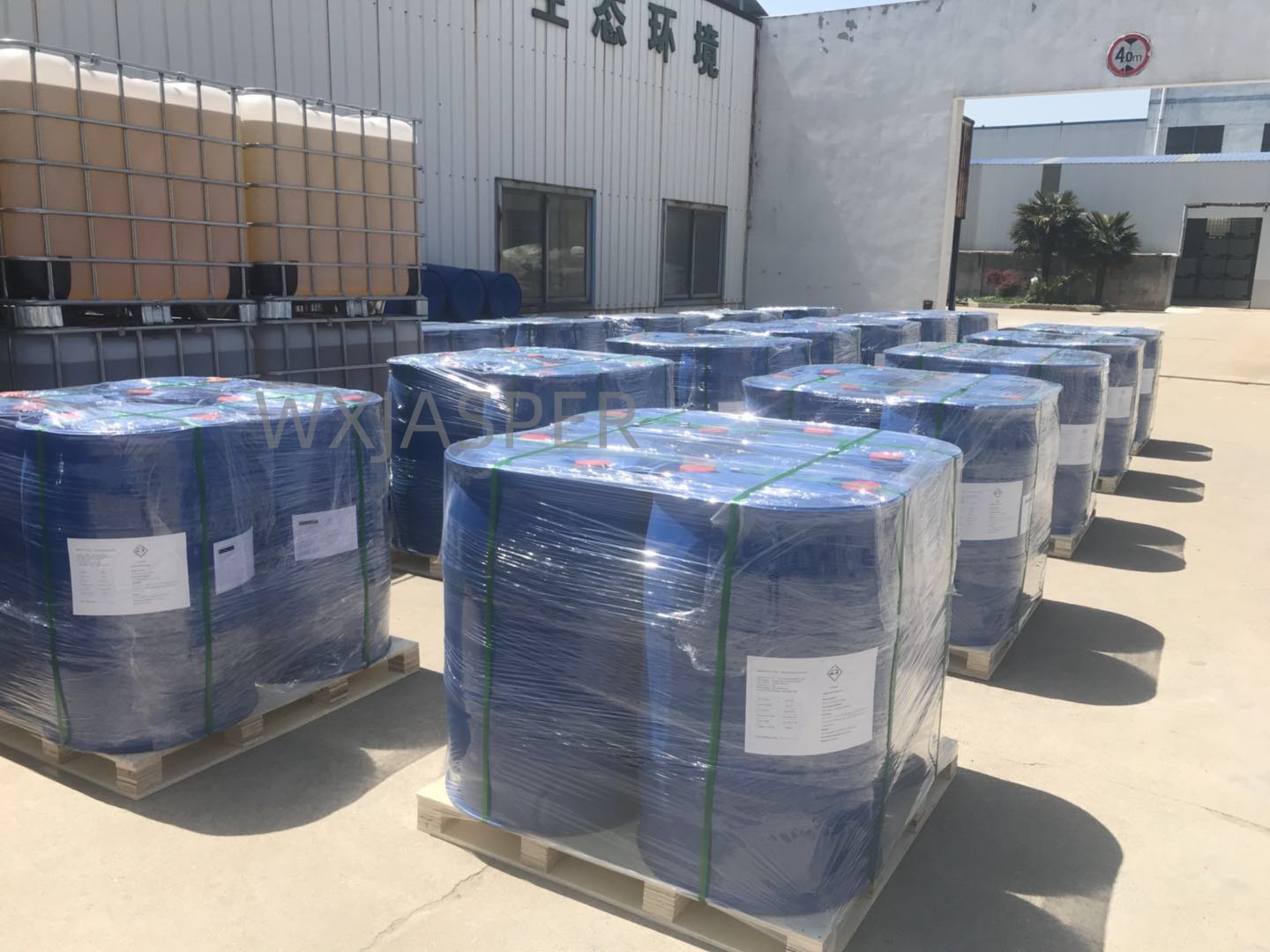
Packing: 200kg/drum

Purity: 99%

1. Core Basic Information

  1. Product Name: HDB-DP Wetting and Dispersing Agent
  2. Chemical Category: Modified phosphate ester anionic wetting and dispersing agent, synthesized by modifying the molecular structure of traditional phosphate esters (e.g., introducing special functional groups, adjusting alkyl chain length). Its molecules contain modified phosphate ester groups and lipophilic/hydrophilic segments, achieving wetting and dispersion through the dual mechanism of "enhanced electrostatic adsorption + optimized steric hindrance", with performance superior to conventional phosphate ester products.
  3. Appearance and Properties: At room temperature, it is a pale yellow to tan transparent viscous liquid, free from visible impurities, precipitation, or stratification, with moderate fluidity, facilitating metering and addition during production.
  4. Core Functions: Efficiently wets and disperses hard-to-handle active ingredients/powders, enables formula development when used alone, and outperforms conventional phosphate ester products. It meets the demand for simplified formulations of high-performance wetting and dispersing agents in the pesticide and chemical industries.

2. Key Technical Parameters 

Parameter Category Typical Index Range Description
Solid Content 50%-60% High active ingredient content, balancing wetting and dispersion efficiency with storage stability, suitable for the production needs of various complex suspension systems.
pH Value (1% Aqueous Solution) 5.5-7.5 Weakly acidic to neutral range, highly compatible with various pesticide active ingredients (e.g., epoxiconazole, thiamethoxam) and additives, avoiding degradation of components sensitive to strong acids and alkalis.
Viscosity (25℃, mPa·s) 1000-1800 Moderate viscosity, facilitating precise metering while enabling rapid spreading in the system to achieve efficient wetting and dispersion.
Modified Phosphate Ester Content 40%-50% Modified phosphate ester groups are the core of "outperforming conventional phosphate esters and enabling formula use alone", enhancing adsorption and dispersion capacity on particles.
Hazardous Substance Restrictions Free of APEO, heavy metals (Pb/Cd/Hg/As ≤5mg/kg), and formaldehyde Complies with environmental standards such as EU REACH and China's GB/T 23377-2020, suitable for green production scenarios.

3. Core Performance Advantages

  1. Formula Feasibility When Used Alone & Superior Performance: No need to compound with other wetting and dispersing agents; it can form a stable formula system when used alone. Its wetting and dispersion performance for hard-to-disperse active ingredients (e.g., epoxiconazole, pyraclostrobin) is more than 30% better than conventional phosphate ester products. After dispersion, the system particle size D90 is ≤2.5μm, and the suspension rate remains ≥94% after 14 days of thermal storage at 54℃±2℃, solving the industry pain points of "conventional phosphate esters requiring compounding and insufficient performance".
  2. Broad System Compatibility: Compatible with all types of pesticide SC systems such as fungicides (epoxiconazole, tebuconazole), insecticides (thiamethoxam, chlorantraniliprole), and herbicides (glyphosate, 2,4-D). It is also suitable for the dispersion of chemical powders such as titanium dioxide for coatings and carbon black for inks. No formula adjustment is required for a single system, significantly reducing R&D and production costs.
  3. Excellent Quality Stability: Adopting a mature modified phosphate ester synthesis process, the fluctuation of key indicators such as solid content, pH value, and viscosity between batches is ≤5%, ensuring consistent performance of each batch of products in large-scale production and reducing formula adjustment costs caused by product fluctuations.
  4. Good Process Compatibility: Excellent high-shear resistance, with stable molecular structure at a sand milling speed of 1500-3000r/min. It can be compounded with non-ionic surfactants (e.g., Nongru 600#) and anionic emulsifiers (e.g., sodium dodecyl sulfate) without compatibility conflicts, suitable for complex formulation formulas.

4. Application Scenarios

  1. Agricultural Field: Production of various pesticide suspensions (SC), especially suitable for hard-to-disperse active ingredient systems (e.g., epoxiconazole SC, pyraclostrobin SC). It can form a stable formula when used alone, improving the wetting and dispersion efficiency of active ingredients and reducing the input of compounded additives. It is also suitable for seed coating systems to enhance the adhesion and uniformity of the liquid on seeds.
  2. Chemical Field: Dispersion of powders for coatings and inks (e.g., titanium dioxide slurry, carbon black ink). The strong wettability enables rapid dispersion of powders, improving end-product performance such as coating hiding power and ink blackness, while simplifying formula composition.
  3. Other Fields: Water-based adhesives, ceramic slurries, etc., helping powders disperse uniformly, improving product quality and production efficiency, and simplifying the formula development process.

5. Usage and Storage Instructions

  1. Recommended Dosage:
    • Pesticide SC systems: 2.0%-4.0% (based on the total mass of the system); for hard-to-disperse active ingredient systems, 3.0%-4.0% is recommended;
    • Chemical powder systems: 3.0%-5.0%, adjusted according to the oil absorption and hydrophilicity/hydrophobicity of the powder.
  2. Usage Method:
    • Pre-mixing stage: Premix with active ingredients/powders and water, stir for 5-10 minutes, then perform sand milling to give full play to the synergistic effect of wetting and dispersion;
    • Post-adjustment stage: If the system particle size is still too large after sand milling, add 0.5%-1.0% of HDB-DP and stir for 15-20 minutes to optimize the dispersion effect.
  3. Storage Conditions:
    • Store in a sealed, cool, dry, and ventilated place, with the temperature controlled at 5℃-35℃, avoiding direct sunlight and high temperatures (temperatures >40℃ may accelerate product aging);
    • The package should be sealed as soon as possible after opening to prevent moisture or impurities from mixing in and affecting product performance.
  4. Shelf Life: Under specified storage conditions, the shelf life is 12 months (from the production date), and it is recommended to use it within 1 month after opening.

6. Precautions

  1. It is recommended to conduct a 200g small-scale test before first use to determine the optimal dosage for the adapted formula, avoiding insufficient wetting and dispersion due to insufficient dosage or increased costs due to excessive dosage;
  2. Wear nitrile gloves during operation to avoid direct contact with skin and mucous membranes. If it gets into the eyes, rinse immediately with plenty of water and seek medical attention;
  3. Do not store or use with strongly alkaline substances (pH >8.0) and strong reducing substances to prevent decomposition of modified phosphate ester groups and avoid affecting wetting and dispersion performance;
  4. Slight color difference (pale yellow to tan) may exist between different batches of products, which is a normal phenomenon and does not affect wetting and dispersion efficiency, so it can be used with confidence.